Most comparisons between composite decking manufacturers start with the same three criteria: recycled content, weather performance and warranty length. They are essential figures and the right place to begin, but on a professional project what separates one manufacturer from another is the system behind the board.
This guide is written from the perspective of a manufacturer that has been on the other side of that evaluation for decades. Exterpark is a Spanish composite decking manufacturer, part of Yvyra Group, operating from Barcelona since 1977, with WPC decking supplied to professional projects in more than 80 countries. What follows is the criteria that separate manufacturers in practice, and what to ask each brand before the specification closes.
What do recycled content, weather performance and warranty length tell you?
They tell you what the board is made of, how it behaves outdoors and how long the manufacturer stands behind it, which is why they belong at the start of any comparison. Exterpark Tech boards contain 95% recycled material, the fixing systems have been tested by independent laboratories under extreme conditions, and the aluminium joist system carries a 25-year warranty.
These figures set the standard a manufacturer has to meet. When two brands both meet it, the difference lies one level further: in the fixing system, in what the testing covers and in what happens when a board has to be reached after installation. On a hotel terrace, that last point often shapes the long-term cost of the deck.
The next sections look at each of those points in turn.
What should a composite decking manufacturer comparison actually look at?
Four things, in descending order of how much they change over the life of the asset.
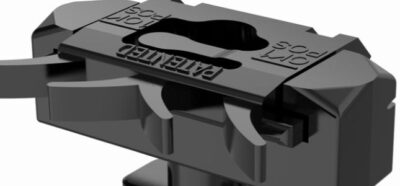
The fixing system, and whether it is the manufacturer’s own. A brand that buys in a generic clip can change its supplier, geometry or material between production runs with no obligation to tell anyone. A registered system corresponds to a fixed, documented design attached to a named holder.
What the testing covers. Most published test data refers to the board. Far less refers to the assembly of board, clip and substructure, which is what the specification document actually describes and what fails in practice.
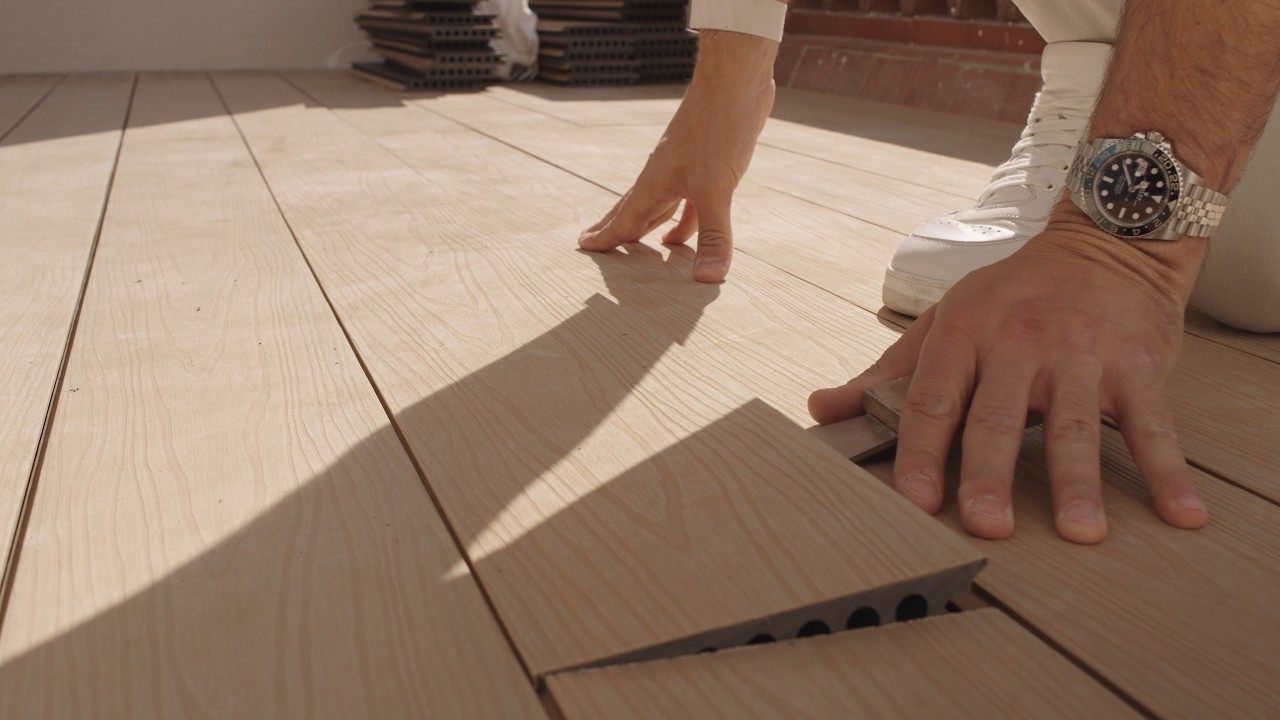
Whether the surface can be opened. Conventional concealed clip systems install without a visible screw but leave the board trapped. Reaching one damaged piece means lifting the ones around it. This is the principle behind accessible decking systems.
Range compatibility. A clip that works with three collections out of six creates a detailing problem the moment a project mixes formats.
Exterpark Decking Technologies | SHARK Installation – No Screws, 100% Accessible
What does a registered patent prove?
It proves originality at the date of filing, ownership by a named holder, and the existence of a public document anyone can consult. That last point is the useful one: a patent is verifiable by a third party, which almost nothing else in a product brochure is.
What a patent history does indicate is continuity. Exterpark registered its first invisible fixing system in 1995 and has since accumulated nine patented fixing technologies, the most recent being the Shark system. Each generation answered something the previous one left open: composite boards arriving with an expansion coefficient timber clips were never designed for, aluminium joists imposing tolerances a batten clip could not hold, rooftop terraces making uplift a governing load rather than a marginal one.
That is a development record spanning three decades under one legal entity, and it can be checked rather than taken on trust.
How is the performance of the system proven?
Through independent testing. External laboratories check how the system behaves in real conditions (load, impact, heat and cold) and issue documentation that can go straight into a tender file.
Exterpark’s fixing systems have been assessed by AIDIMME, Tecnalia and Applus, covering two million impact cycles, an operating range from -40°C to +90°C and load capacity above 4,000 kg/m². The relevant detail for a specification team is not the figures themselves but their scope: the testing addresses the assembly rather than the board in isolation.
The two kinds of evidence answer different questions, and a comparison needs both:
A manufacturer who can produce one but not the other has answered half the comparison.
Does European or US manufacturing origin matter?
Less than the marketing on either side suggests, and in a narrower way than usually claimed.
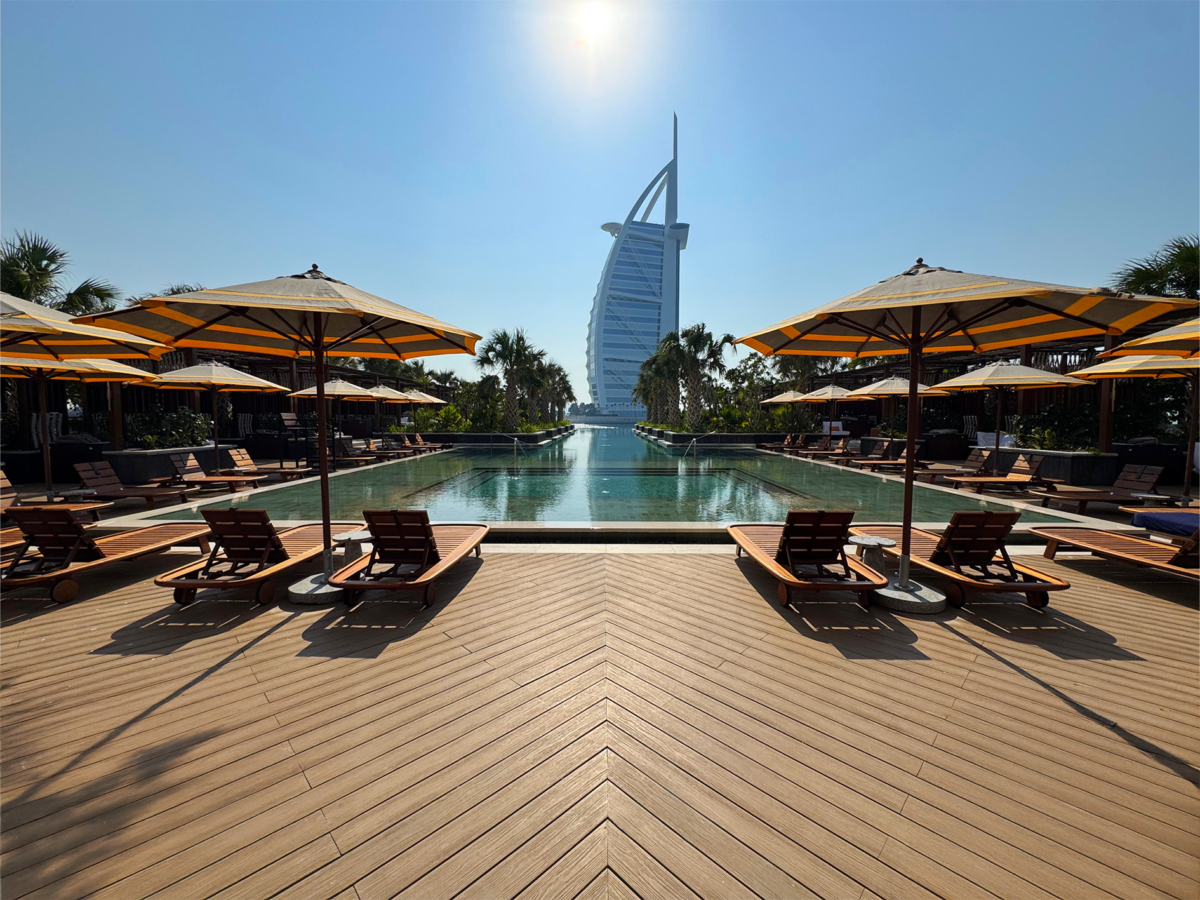
Composite decking manufacturing in Europe is not a quality claim in itself. What makes the difference is who developed the system and how. Exterpark develops and patents its fixing systems in-house, and each generation has been designed around the projects it supplies: rooftop terraces, hotel decks, pool surrounds and public spaces where boards need to be reached and reinstated after installation.
For any project, the practical questions are whether the documentation arrives in a form the local specification process accepts, and whether technical support is reachable in the project’s time zone. Those are logistics and service questions, not quality claims, and they should be asked as such. A manufacturer supplying projects across more than 80 countries has already resolved them.
What to request from every brand on the shortlist
The same four documents, so the answers can actually be compared:
Patent registration references, with dates, so they can be checked independently. Laboratory test certificates from named bodies, with the scope of each test stated. Installation detailing for the substructure the project will use. And documented references at a comparable level, because a system proven on a domestic terrace is not evidence for a hotel roof deck.
A brand that supplies all four at specification stage rather than after the order has answered the comparison. One that supplies them late, or not at all, has also answered it.
Frequently asked questions
Who is Exterpark and what does it manufacture?
Exterpark is a Spanish composite decking manufacturer based in Barcelona since 1977. The brand belongs to Yvyra Group. Its WPC composite range, Exterpark Tech composite decking, is supplied to residential, hospitality, commercial and public-space projects in more than 80 countries.
Is recycled content a useful way to compare composite decking manufacturers?
Yes, as a starting point. Recycled content tells you what the board is made of and how it supports the sustainability goals of a project; Exterpark Tech boards contain 95% recycled material. To tell two brands apart, read it alongside the fixing system and the scope of the testing.
Is a European composite decking manufacturer a viable composite decking alternative to Trex or TimberTech?
Yes. Beyond recycled content, weather performance and warranty, the comparison comes down to whether the fixing system is the manufacturer’s own, whether the testing covers the installed assembly, and how quickly documentation and technical support reach the project.
How can I verify a manufacturer’s patent claim?
Request the registration references and search them in a public patent database such as Espacenet. A claim that cannot be traced to a registration document should be read as a marketing statement rather than a technical one.
What is the difference between concealed fixing and a serviceable system?
Concealed fixing describes the finished surface: no visible screws. A serviceable system describes what happens afterwards: whether one board can be released and reinstated without disturbing the boards beside it. Most systems deliver the first without the second.
Why does the scope of a test certificate matter more than the figures on it?
Because a figure for the board alone says nothing about the assembly that will actually be installed. Ask whether the certificate covers board, fixing and substructure together, and compare brands on that basis rather than on headline numbers.
Request the technical file for your comparison
If you are shortlisting composite decking manufacturers for an elevated roof deck, a hotel terrace, a pool surround or a high-traffic public space, Exterpark’s specification team can supply the full file: data sheets, laboratory certificates, patent references and installation detailing, available at specification stage rather than after the order.